Oct 2025: Book by Mia Bennett and Klaus Dodds, Unfrozen: The Fight for the Future of the Arctic

A new book examining the rapid climate and geopolitical shifts in the Arctic, Unfrozen: The Fight for the Future of the Arctic, by Mia Bennett and Klaus Dodds, has been recently published by Yale University Press and launched in London. Mia Bennett is Associate Professor of Geography at the University of Washington, founder and editor of the blog Cryopolitics, and an associate researcher at InfraNorth. Klaus Dodds is Professor of Geopolitics at Royal Holloway, University of London.

Nowhere is the dual threat of climate change and geopolitical contest felt more strongly than in the Arctic. Sea ice is declining rapidly, wildfires are burning, and permafrost is thawing. All the while, global interest is gathering apace as the region’s frozen worlds melt into new strategic waterways, unleashing energy and trade booms. Mia Bennett and Klaus Dodds examine the state of the Arctic today, a region of experimentation for everything from subsea technologies to new forms of governance created by Indigenous Peoples who for centuries have fought for rights and recognition. Growing geopolitical competition is accompanying environmental disruption. Countries including Russia, China, and the United States are competing for commodities, access and influence while straining the cooperative mechanisms that arose after the Cold War. From rising sea levels due to melting glaciers, to tensions between great powers determined to protect their territory and resources, the Anthropocene’s impacts on the Arctic are truly global.
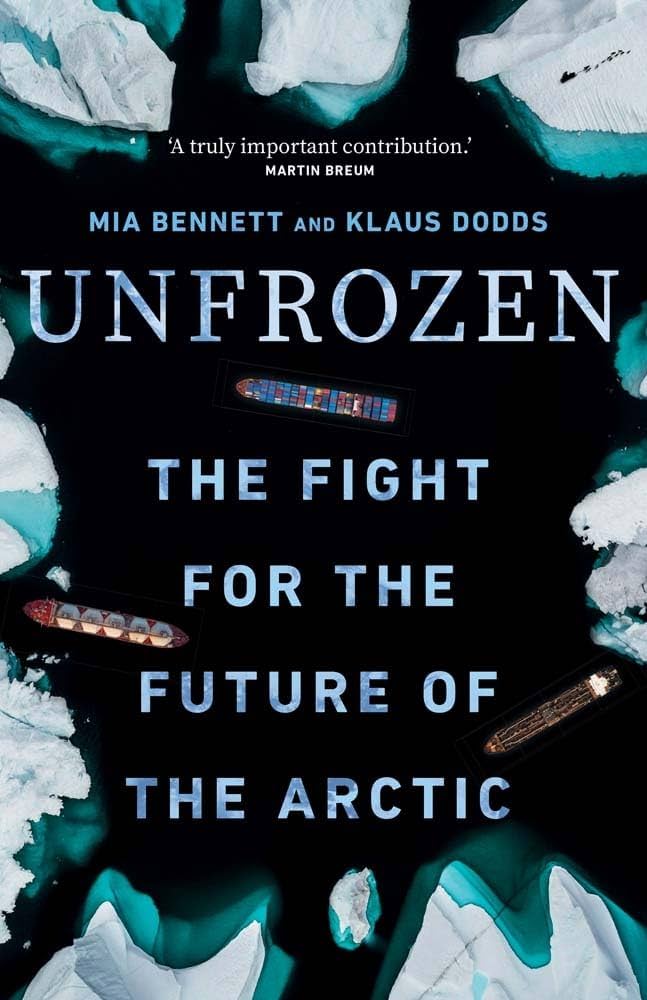
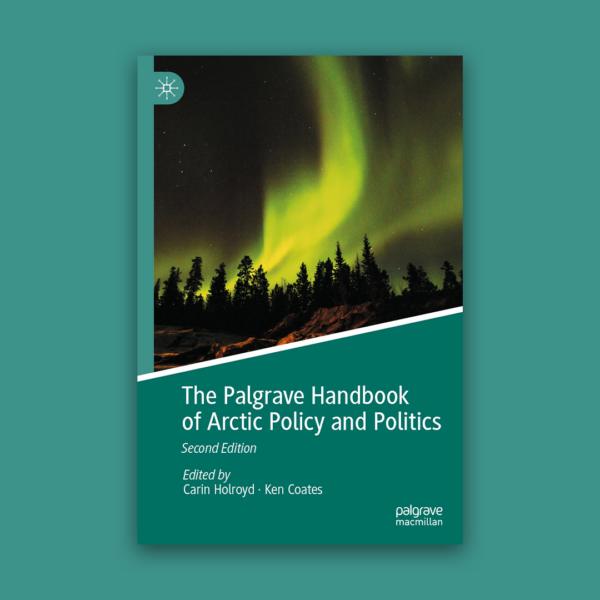
Unfrozen: The Fight for the Future of the Arctic by Mia Bennett and Klaus Dodds (Yale University Press, September 2025).

Jan 2026: InfraNorth Contributions to Forthcoming Book “Arctic Silk Roads”

InfraNorth researchers contribute two chapters to the forthcoming book Arctic Silk Roads: An Anthropology of the Unbuilt, edited by Natalia Magnani and Matthew Magnani. The volume will be published by Berghahn Books in January 2026 as part of the Studies in the Circumpolar North series. As climate change accelerates, the melting of sea ice is […]

Dec 2025: Peter Schweitzer Interviewed on Austrian Public Radio Ö1

The Austrian public broadcaster Österreichischer Rundfunk (ORF) featured InfraNorth principal investigator Peter Schweitzer in an interview on its Ö1 weekend feuilleton “Diagonal” on December 6, 2025, which focused on the politics of infrastructure. Schweitzer appeared in a segment titled “A Silk Road Across the Arctic” (in German: Seidenstrasse über die Arktis), interviewed by Erich Klein […]

Journal of Contemporary Ethnography

Dec 2025: Forthcoming Special Issue of the Journal of Contemporary Ethnography

The forthcoming special issue “Ethnographies of Infrastructure” of the Journal of Contemporary Ethnography, guest edited by Philipp Budka, Peter Schweitzer, and Olga Povoroznyuk, is progressively being made available online ahead of the print edition, which will appear in February 2026. The introduction, authored by Schweitzer, Povoroznyuk, and Budka, is now available open-access. It presents the […]

Journal of Contemporary Ethnography

Dec 2025: Article by Peter Schweitzer, et al. in the Journal of Contemporary Ethnography

The Journal of Contemporary Ethnography has recently published the article “Scenarios and Ethnography: Infrastructural Futures as Windows into the Present” by Peter Schweitzer, Olga Povoroznyuk, Philipp Budka, Alexandra Meyer, Katrin Schmid, and Nikita Strelkovskii. This article reflects on two scenario workshops conducted in 2023 in Kirkenes, Norway, and Churchill, Canada, as part of the ERC […]

Journal of Contemporary Ethnography

Dec 2025: Article by Katrin Schmid in the Journal of Contemporary Ethnography

The Journal of Contemporary Ethnography has published the article “Amazon in the Arctic: E-Commerce, Infrastructure, and Alimentary Assemblages in Nunavut, Canada” by InfraNorth researcher Katrin Schmid. Since establishing a delivery hub in Iqaluit, Nunavut in 2020, Amazon.com, Inc. has become an essential resource for many Nunavut residents, providing affordable access to goods otherwise constrained by […]